


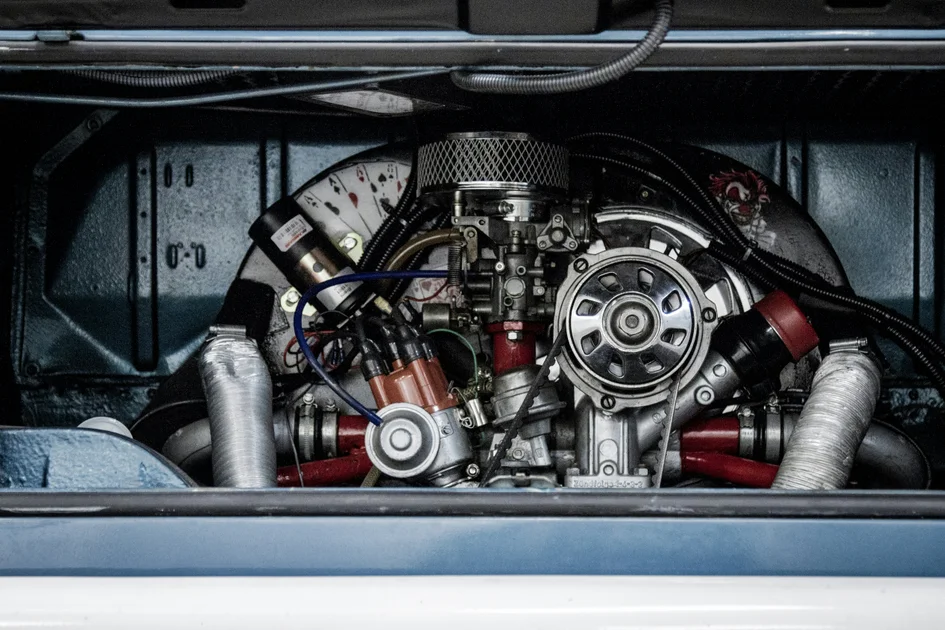
Understanding why is my vehicle engine losing power while driving requires us to look beyond the cold mechanics of steel and silicon, viewing the automobile as a mirror of our own fragile momentum. In 2026, our vehicles have become sophisticated symphonies of sensors and software, yet they remain susceptible to the fundamental laws of thermodynamics and entropy. When a car falters on the open road, it is not merely a mechanical failure; it is a sudden, jarring disruption of the narrative of progress we impose upon our journeys. This loss of vitality, where the pedal meets resistance instead of response, forces us to confront the limitations of our machines and the necessity of maintenance in an era where we often mistake technological complexity for absolute reliability.
The Fuel Delivery Dilemma
At the heart of the internal combustion process lies the delicate balance of fuel and air, a rhythmic respiration that sustains the engine’s fire. When your vehicle engine loses power while driving, the most common culprit is a disruption in this vital intake process, often stemming from a clogged fuel filter or a failing fuel pump. As we navigate the roads of 2026, the impurities in modern fuel can slowly accumulate, creating an invisible barrier that starves the cylinders of the energy they require to maintain speed. This is a quiet, persistent erosion of performance that often goes unnoticed until the engine gasps for fuel during a high-demand moment, such as accelerating onto a highway.
Beyond the pump, the fuel injectors themselves may succumb to deposits that alter the spray pattern, leading to an inefficient burn that diminishes power output. Much like the human body requires consistent, high-quality nourishment to function at its peak, the modern engine depends on a pristine delivery system. When this flow is compromised, the computer governing your vehicle’s performance may enter a “limp mode,” a safety protocol designed to protect the hardware from catastrophic damage. It is a humbling reminder that even in our most advanced machines, the most basic requirements for life—fuel, air, and spark—remain the final arbiters of our ability to move forward.
Airflow and Induction Failures

The Breath of the Engine
Just as fuel must flow, air must be inhaled with precision; any obstruction in the intake path acts like an athlete trying to run a marathon through a straw. A dirty mass airflow sensor or a restricted air filter can fundamentally change the engine’s perception of reality, causing it to miscalculate the mixture and lose its vigor. In 2026, automotive diagnostic tools have become incredibly precise, often flagging these air-related issues long before the driver perceives a total loss of power. However, the physical reality of a clogged filter remains a testament to the environment we drive through, where dust and road debris constantly challenge our machine’s intake efficiency.
Furthermore, turbochargers and superchargers, which have become ubiquitous in modern efficiency-focused engines, introduce another layer of complexity. If a vacuum line leaks or a wastegate fails to actuate correctly, the forced induction system collapses, leaving the engine to struggle with atmospheric pressure alone. This sudden transition from effortless torque to sluggish aspiration is a stark lesson in how much we rely on auxiliary systems to amplify our capabilities. Maintaining these high-pressure pathways is essential, as even a minor oversight in hose integrity can lead to a significant performance deficit during critical driving maneuvers.
Sensor Data and Computer Logic
Modern vehicles operate on a foundation of digital trust, where an array of sensors constantly reports the state of the machine to the central processing unit. When you wonder why is my vehicle engine losing power while driving, you are often witnessing a disagreement between sensors or a failure of the “brain” to process incoming data. If the crankshaft position sensor or the throttle position sensor sends erratic signals, the engine management system may lose its timing, causing a jittery loss of power that feels like a loss of control. This digital dependency means that your car is constantly evaluating its own health, and it will prioritize its survival over your convenience.
This reliance on software also means that electrical gremlins, such as corroded ground wires or dying batteries, can masquerade as mechanical failures. In an interconnected 2026 vehicle, a voltage drop across a critical module can cause a cascade of errors that mimics a fuel delivery issue. It is a complex dance of electrons, and when the beat is missed, the vehicle begins to stumble. Understanding this requires a shift in perspective; we must view our cars not just as metal frames, but as sentient-like ecosystems that require electrical harmony to express their full potential on the asphalt.
Comparison Table of Power Loss Causes
| Issue Category | Primary Symptom | Estimated Cost (2026) | Urgency Level |
|---|---|---|---|
| Fuel System | Stuttering/Hesitation | Moderate – High | Critical |
| Air Intake | Sluggish Acceleration | Low – Moderate | Maintenance |
| Ignition System | Misfires/Rough Idle | Moderate | Immediate |
| Exhaust/Cat | Exhaust Backpressure | Very High | Catastrophic |
| Sensor Failure | Limp Mode Activation | Variable | High |
| Transmission | RPM Flare/Slip | Very High | Critical |
Reddit & Expert Community Consensus
“When the engine cuts power under load, I always start by checking the fuel pressure at the rail. Most DIYers forget that a pump can still spin but fail to hold pressure under high RPM. Also, in the 2026 models, always check your software version; sometimes a manufacturer recall update is the only thing keeping the ECU from throwing a false limp mode code.” — Senior Automotive Technician, Forum Member.
The community consensus suggests that while we often fear the worst—a blown engine or a failing transmission—the reality is usually a simple case of neglected maintenance. From forums to professional repair shops, the advice remains consistent: start with the cheapest, most accessible components before assuming a catastrophic failure. This expert perspective echoes the philosophical truth that our grandest problems often have the smallest, most overlooked origins.
Exhaust and Catalytic Restrictions
The engine is essentially a pump, and if it cannot expel the gases it creates, it will inevitably choke on its own output. A failing catalytic converter is a common reason why a vehicle loses power, especially as the vehicle ages and the internal honeycomb structure begins to break apart. This creates a physical blockage that prevents the engine from breathing out, effectively throttling the combustion process. It is a poetic irony that the very device designed to clean the exhaust can, through age and neglect, become the anchor that drags the vehicle’s performance down to a crawl.
Monitoring exhaust health is often overlooked until the vehicle is already struggling, as the symptoms are subtle and gradual. A loss of power that worsens as the engine heats up is a classic hallmark of a restricted exhaust system. Keeping the exhaust path clear is an act of stewardship for both the machine and the environment, ensuring that the energy consumed is converted into motion rather than heat and waste. In 2026, with stricter emission standards, the health of these components is more vital than ever for the longevity of the entire powertrain.
Key Takeaways
- Prioritize regular fuel filter changes to prevent starvation during high-load driving.
- Clean or replace air intake sensors to ensure the engine computer receives accurate data.
- Monitor your vehicle’s electrical system, as voltage drops can trigger artificial power loss.
- Inspect the exhaust system for signs of blockage or catalytic converter degradation.
- Always scan for diagnostic trouble codes, as they represent the vehicle’s own internal record of its failures.
- Consult professional technicians if the issue persists after basic maintenance, as transmission or internal engine wear may be the cause.
Frequently Asked Questions
Is it safe to keep driving if my car loses power?
No, it is dangerous. Losing power can leave you stranded in traffic or unable to perform emergency maneuvers. You should pull over safely and assess the situation.
Can low oil cause an engine to lose power?
Yes, low oil levels can cause friction and trigger safety sensors that limit engine power to prevent permanent damage to the engine block.
Why does my car lose power only on hills?
Hills demand higher torque. If your fuel pump is weak or your air filter is clogged, the engine cannot meet the increased demand for fuel and air.
What is “limp mode” and why does it happen?
Limp mode is a protective state triggered by the ECU when it detects a major fault. It limits speed and power to allow you to reach a mechanic safely.
Does a bad spark plug cause power loss?
Absolutely. A failing spark plug prevents complete combustion, resulting in a misfire that noticeably reduces the power the engine can generate.
Conclusion
Ultimately, when your vehicle engine loses power while driving, it is a call to reconnect with the machine that carries you through the world. By diagnosing these issues with patience and precision, we honor the engineering that makes our modern mobility possible. Whether it is a clogged filter or a complex sensor failure, the solution is always found in the details. As we move through 2026, may we treat our vehicles with the respect they deserve, ensuring that every journey remains a testament to the enduring relationship between human intent and mechanical reliability.