


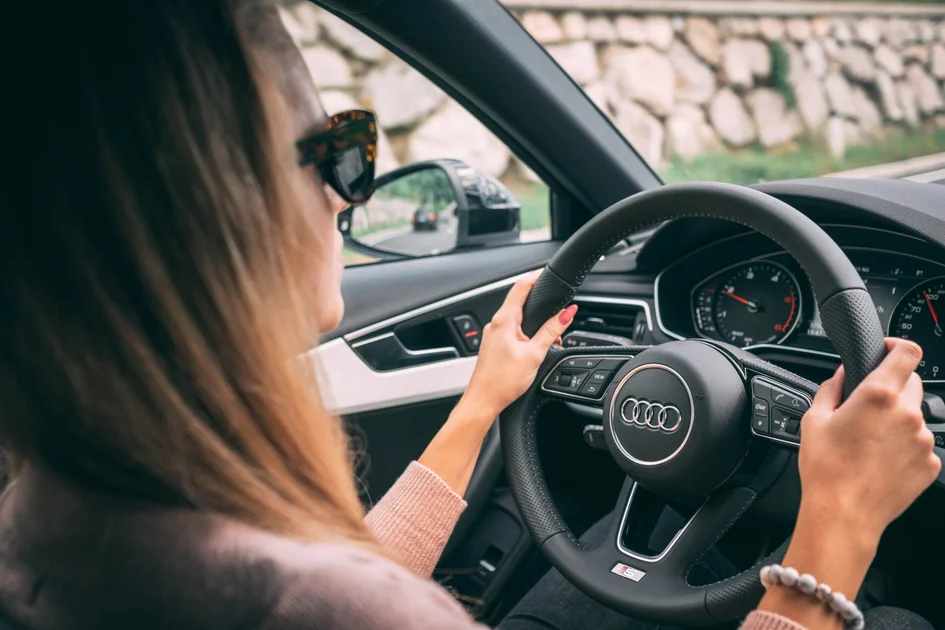
Defensive driving techniques for safer daily commutes are not merely a collection of maneuvers or mechanical habits; they represent a profound philosophical commitment to the preservation of life in an increasingly chaotic modern landscape. In this year of 2026, the act of commuting has evolved into a complex dance of human intuition and sophisticated machine intelligence, requiring a heightened state of presence from every driver on the asphalt. To traverse the public roads is to participate in a social contract where our primary duty is the protection of the collective, not just the fulfillment of our own destination. By cultivating a mindset of vigilance and anticipatory grace, we transform the mundane journey into a practice of mindfulness, ensuring that our arrival is not just a statistical probability, but a deliberate outcome of our conscious engagement with the environment.
The Philosophy of Spatial Awareness
At the core of safe mobility lies the concept of spatial awareness, a cognitive discipline that transcends the simple act of looking through a windshield. In 2026, our vehicles are equipped with arrays of sensors that act as an external nervous system, yet these technological marvels cannot replace the human capacity for situational discernment. To practice true defensive driving, one must learn to view the road as a fluid ecosystem rather than a static map. This means constantly scanning the horizon for anomalies, predicting the erratic movements of others, and maintaining a buffer zone that grants you the luxury of time. Time is the most precious currency on the road; when you provide yourself with adequate stopping distance, you are essentially buying the space needed to rectify an error before it becomes a tragedy.
Developing this sense of space requires a deliberate detachment from the internal distractions that plague our modern attention spans. Consider the vehicle not as a capsule of isolation, but as an extension of your own awareness, permeable and sensitive to the subtle cues of shifting traffic flow. When you observe the brake lights of a car three vehicles ahead, you are engaging in a predictive act that aligns your pace with the pulse of the highway. This proactive stance reduces the necessity for reactive, panic-induced maneuvers that characterize the amateur driver. By anchoring yourself in the present moment, you elevate the act of commuting from a stressful chore to a disciplined exercise in environmental mastery, effectively neutralizing the unpredictability of human error.
Advanced Predictive Maneuvering

Predictive maneuvering is the art of reading the intent of other road users through the observation of subtle behaviors. A slight drift within a lane, a hesitant acceleration, or the orientation of a driver’s head can all serve as precursors to a sudden decision. In the high-traffic environment of 2026, where micro-mobility devices and autonomous delivery bots share the infrastructure with heavy passenger vehicles, the complexity of these cues has increased exponentially. A defensive driver treats every intersection as a site of potential conflict, scanning cross-traffic with the skepticism of a seasoned navigator. By maintaining a mental model of where every vehicle around you is heading, you can preemptively adjust your speed or trajectory, creating a harmonious flow that minimizes the risk of sudden mechanical or human failure.
The Role of Mental Preparation
Before even engaging the ignition, a driver must undergo a internal calibration, acknowledging that the state of one’s mind profoundly influences the safety of the journey. If you are burdened by anger, fatigue, or the intense pressure of a deadline, your cognitive processing speed decreases, rendering you less capable of responding to the unexpected. The practice of defensive driving begins with the cultivation of emotional equilibrium, ensuring that the driver remains a calm observer rather than an active combatant in the theater of the road. By intentionally slowing your breathing and grounding your focus, you create a buffer against the external stressors that often lead to road rage or poor decision-making. This psychological preparation is the most critical tool in your safety arsenal, as it dictates the quality of every decision you make while behind the wheel.
Comparison of Safety Strategies
| Strategy | Focus Area | Technological Level | Primary Benefit |
|---|---|---|---|
| Predictive Scanning | Long-range observation | Low (Human-centric) | Early hazard detection |
| Buffer Maintenance | Spatial management | Medium (Adaptive Cruise) | Increased reaction time |
| Vehicle-to-Everything (V2X) | Digital integration | High (Networked) | Automated collision alerts |
| Cognitive Priming | Mental state | None (Psychological) | Reduced emotional error |
| Dynamic Braking | Kinetic management | High (ABS/EBD) | Controlled emergency stops |
Pros and Cons Analysis
Adopting a rigorous defensive driving philosophy offers undeniable benefits, most notably the significant reduction in the likelihood of accidents and the mitigation of stress during daily travel. By prioritizing safety, you also preserve the mechanical integrity of your vehicle, as smooth, anticipatory driving reduces wear on braking systems and tires. However, the drawbacks involve the high cognitive load required to maintain constant vigilance. This level of focus can be mentally exhausting over long durations, leading to a form of sensory fatigue that must be managed with periodic breaks or moments of rest. Furthermore, there is a social dimension where defensive behavior might be perceived as hesitancy by more aggressive drivers, occasionally creating friction that requires the defensive driver to demonstrate further patience and restraint.
Ultimately, the balance between safety and efficiency is a personal choice that rests on the driver’s values. While the aggressive driver might reach their destination moments sooner by weaving through traffic, they do so at the cost of significantly higher risk and increased fuel consumption. The defensive driver accepts that the journey itself is a significant portion of the day and chooses to invest in a safer, more stable experience. This trade-off is inherently rational; the minor loss in total travel time is vastly outweighed by the peace of mind and the physical security of oneself and others. In the long term, this approach fosters a sustainable habit of travel that respects the shared nature of our public infrastructure and promotes a culture of mutual respect on the road.
The Evolution of Infrastructure in 2026
The landscape of 2026 is defined by smart infrastructure that communicates directly with modern vehicles, providing a new layer of data to the defensive driver. Smart traffic lights that optimize flow and digital signage that warns of accidents miles ahead are now standard in most metropolitan areas. A truly defensive driver utilizes these tools, not as a replacement for personal judgment, but as a supplementary layer of information that enhances the overall safety profile of the commute. By integrating these digital insights with traditional observational skills, one creates a multi-layered defense that is significantly more resilient to accidents. This synergy between human intuition and machine-generated data represents the pinnacle of modern transport safety, allowing for a more efficient and secure transit experience for everyone involved.
As we navigate this new era, the importance of maintaining your vehicle’s physical systems cannot be overstated, as these are the tools through which your defensive decisions are executed. Routine inspections of tire pressure, brake pad thickness, and sensor calibration are essential duties for any responsible road user. The modern vehicle is a complex machine, and its reliability is directly tied to the diligence of its owner. By treating your vehicle with the same respect you would a high-performance tool, you ensure that when the moment arises to act decisively, your equipment will respond with the necessary precision. This technical stewardship is the final piece of the defensive driving puzzle, grounding your philosophical approach in the tangible reality of mechanical performance and maintenance.
Key Takeaways
- Adopt a proactive mindset to anticipate road hazards before they manifest.
- Maintain a generous buffer zone around your vehicle at all times.
- Prioritize emotional regulation to prevent impulsive and dangerous reactions.
- Utilize 2026 smart infrastructure data to augment your situational awareness.
- Ensure regular mechanical maintenance to keep all safety systems fully operational.
- Recognize that the journey is a social activity requiring mutual respect and patience.
Frequently Asked Questions
How can I stay focused during a long, monotonous commute?
To maintain focus, engage in active scanning rather than passive observation. Periodically check your mirrors, track the distance of the car in front, and utilize audio resources that challenge your mind, such as educational podcasts, rather than mindless entertainment.
Is defensive driving the same as driving slowly?
No, defensive driving is about driving at the appropriate speed for the current conditions. It emphasizes smooth transitions, predictable lane changes, and maintaining sufficient space, which often results in a more consistent and safe pace rather than just driving slowly.
How do I handle aggressive drivers without escalating the situation?
The best approach is to disengage entirely. If someone is tailgating or behaving aggressively, move to a slower lane and allow them to pass. Do not make eye contact or respond to gestures; prioritize your safety over the need to be right.
What are the most critical safety features to look for in a 2026 vehicle?
In 2026, look for advanced collision avoidance systems, pedestrian detection, blind-spot monitoring, and high-quality 360-degree camera systems. These features provide a critical layer of redundancy that supports your defensive driving efforts.
How does emotional state impact my safety on the road?
High levels of stress, anger, or fatigue significantly impair your cognitive function and reaction time. Practicing mindfulness or taking a moment to calm down before driving can prevent the tunnel vision that often leads to accidents.
Conclusion
The journey toward becoming a safer driver is a continuous process of refinement, demanding both intellectual rigor and a commitment to the well-being of the wider community. By adopting the principles of defensive driving in 2026, you move beyond the status of a mere operator and become a true guardian of the road. This transition requires patience, constant vigilance, and the wisdom to prioritize safety over speed. As we navigate the complex, interconnected streets of our modern world, let us do so with the understanding that every mile traveled is an opportunity to practice compassion and responsibility, ensuring that everyone returns home safely.